Skip to content


IRS tax scams 2026 are one of the biggest risks taxpayers face during filing season. The IRS included IRS impersonation by email and text in its 2026 “Dirty Dozen” list of tax scams and warned that scammers use alarming language, fake refund claims, and links to fraudulent websites to steal personal and financial information. The IRS also reported more than 600 social media impersonators during fiscal year 2025, showing how widespread these scams have become.
Many of these scams are designed to create panic. Fraudsters may claim there is a problem with your tax return, promise a large refund, or say you must act immediately to avoid penalties. The IRS warns that scammers often pressure people for money or sensitive information and may use threatening language to make their messages feel urgent.
Common Signs of IRS Tax Scams in 2026
One of the clearest warning signs is an unexpected text message, email, or social media message claiming to be from the IRS. The IRS says it does not make initial contact through email or social media, and it does not send text messages without your permission. If the IRS needs to contact you, it will usually do so first by regular mail through the U.S. Postal Service.
Another major red flag is a message that asks you to click a link, scan a QR code, open an attachment, or verify your information right away. The IRS says scam messages often direct taxpayers to fake websites to “verify” accounts, enter personal information, or claim refunds. It also warns that these links can install malware or ransomware on your device.
Threats are another common tactic. The IRS says impersonators often demand immediate payment, threaten arrest or deportation, and do not allow taxpayers to question or appeal what they supposedly owe. The IRS also says it does not call to demand payment now, threaten arrest, or call to announce a refund.
How Fake IRS Text and Email Scams Usually Work
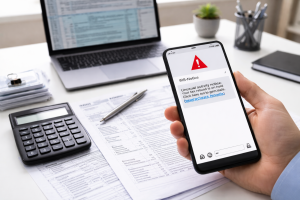
Fake IRS text scams, also known as smishing, often arrive with short urgent messages about refunds, tax credits, account problems, or stimulus-related claims. The IRS has specifically warned that fake texts may ask for personal or financial information and may try to push taxpayers toward fraudulent websites.
Email scams work in a similar way. According to the IRS, scammers send phishing emails that appear official and are meant to steal identities, banking information, and tax data. The IRS says it never emails taxpayers without permission and advises people not to reply, click links, or open attachments in suspicious messages.
Refund scams are especially dangerous because they use good news to lower your guard. A fake message may say you qualify for an unclaimed refund or need to confirm details to receive money. The IRS includes fake refund claims among its scam warnings and advises taxpayers to verify official notices directly through IRS channels instead of trusting unexpected messages.
What to Do If You Receive a Suspicious IRS Message
If you receive a suspicious IRS text, do not reply, click links, or open attachments. The IRS says taxpayers should send the sender’s phone number, message contents, recipient number, and the date and time received to phishing@irs.gov with the subject line “Text.” The IRS also says you can forward the text to 7726 (SPAM) and report it to the Federal Trade Commission.
If you receive a suspicious email, the IRS says not to reply or click anything. Instead, report it to phishing@irs.gov. If the scam involves social media, the IRS says to report the account to the platform and send the full account URL to phishing@irs.gov with the subject line “Social media.”
If you receive a suspicious phone call, the IRS says to record the number and hang up. Suspicious IRS-related calls can be reported to the Treasury Inspector General for Tax Administration (TIGTA) hotline. The IRS notes that while it or a private collection agency may call in some account matters, it does not call to demand immediate payment, threaten arrest, or inform you of a refund.
How to Protect Your Refund and Identity
The best way to protect yourself from IRS tax scams 2026 is to slow down and verify everything before responding. Messages that create fear, urgency, or excitement are often meant to make people act without thinking. The IRS advises taxpayers to watch for threats, unrealistic promises, and suspicious website links, especially links with odd or misspelled web addresses.
El robo de identidad relacionado con impuestos también puede retrasar su reembolso. El IRS indica que su Programa de Protección al Contribuyente puede marcar una declaración sospechosa presentada con su nombre y número de Seguro Social y enviarle una carta solicitándole que verifique su identidad y la información de su declaración. El IRS no procesará esa declaración ni emitirá un reembolso hasta que usted responda.
Si recibe una carta oficial de verificación de identidad del IRS, siga atentamente las instrucciones que contiene. El IRS indica que los contribuyentes pueden recibir cartas como la 5071C , la 4883C o la 5747C para verificar su identidad y la información de su declaración de impuestos, y cada carta explica el siguiente paso a seguir.
Reflexiones finales
Las estafas fiscales del IRS en 2026 son cada vez más sofisticadas, pero las principales señales de alerta siguen siendo las mismas: mensajes inesperados, presión para actuar con rapidez, amenazas, falsas promesas de reembolso y enlaces que lo alejan de los canales oficiales del IRS. El IRS continúa advirtiendo a los contribuyentes que no confíen en mensajes de texto, correos electrónicos o mensajes en redes sociales no solicitados que afirmen provenir de la agencia.
En Castillo Brothers & Associates , creemos que la temporada de impuestos debe manejarse con claridad y confianza. Si necesita ayuda para revisar una situación fiscal sospechosa o para preparar su declaración con la asesoría de profesionales de confianza, nuestro equipo está listo para ayudarle.
¿Necesita ayuda confiable esta temporada de impuestos? Comuníquese con Castillo Brothers & Associates para obtener asistencia tributaria profesional.